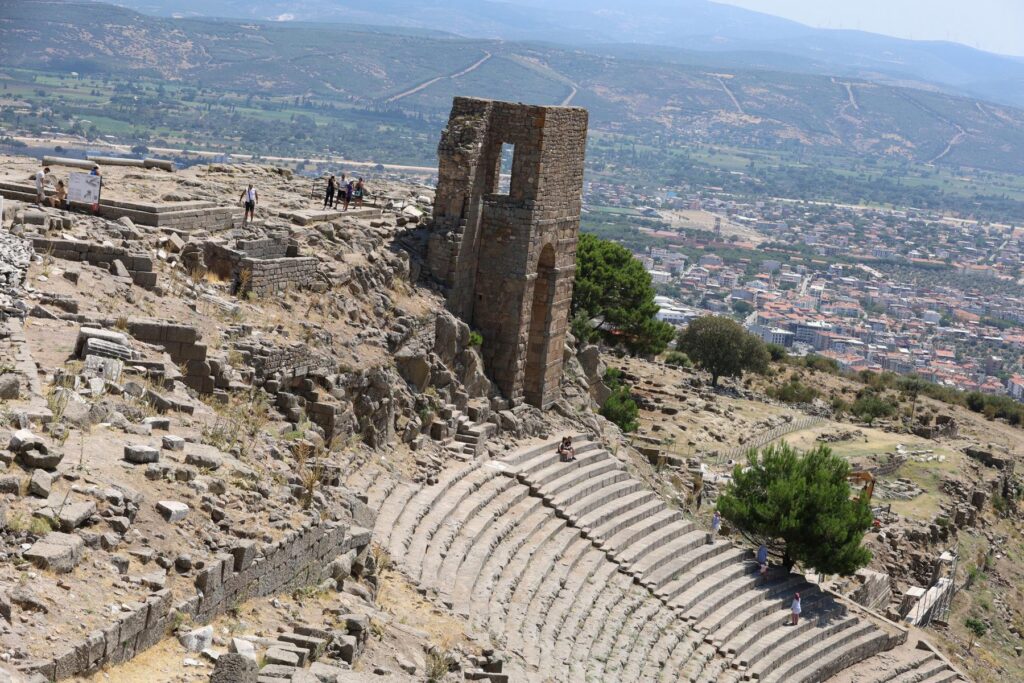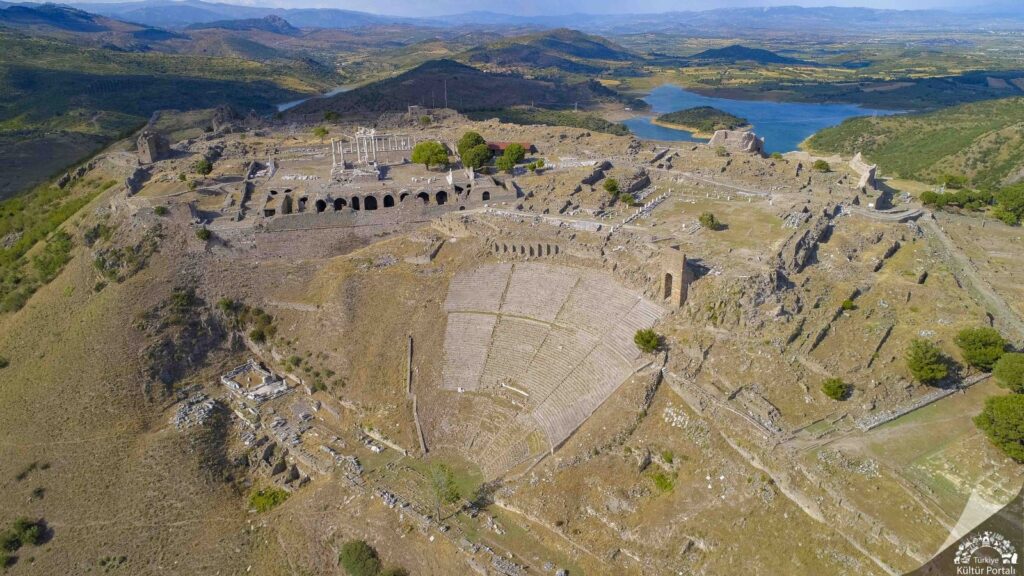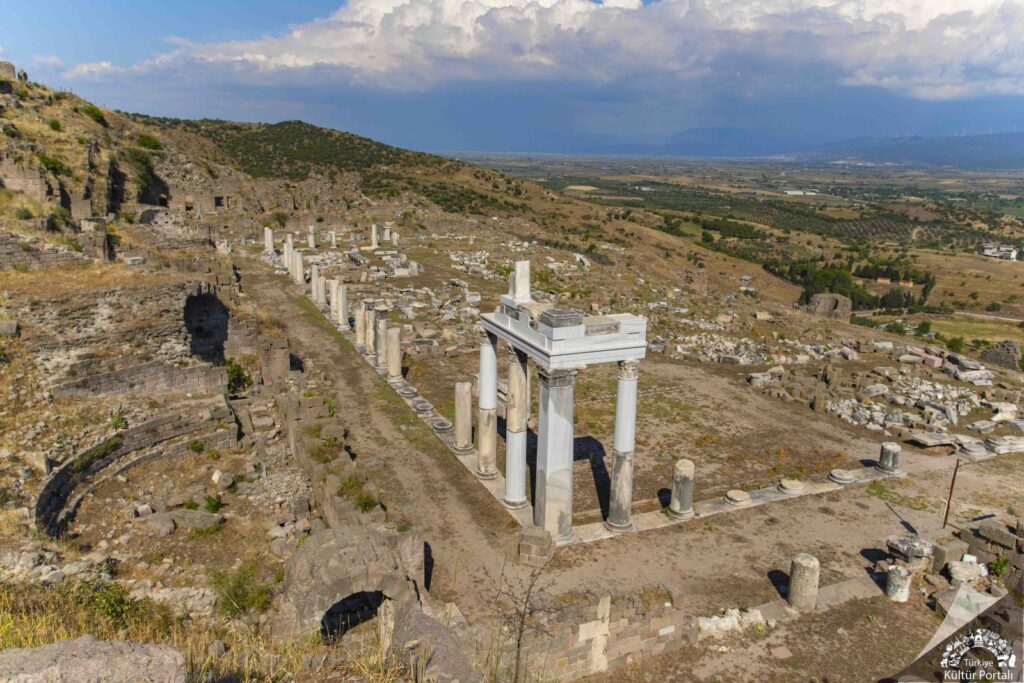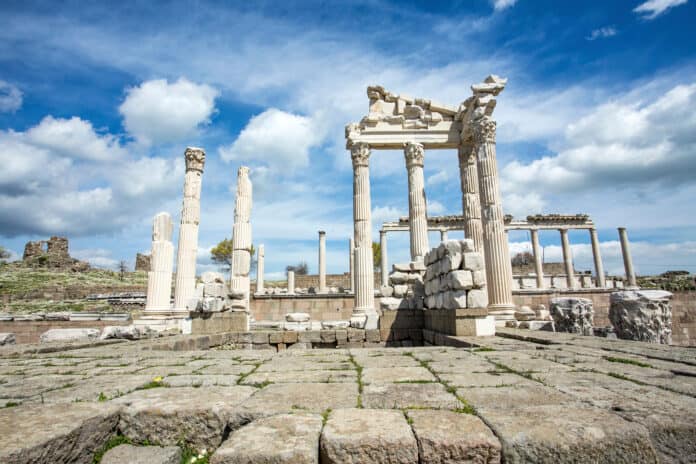
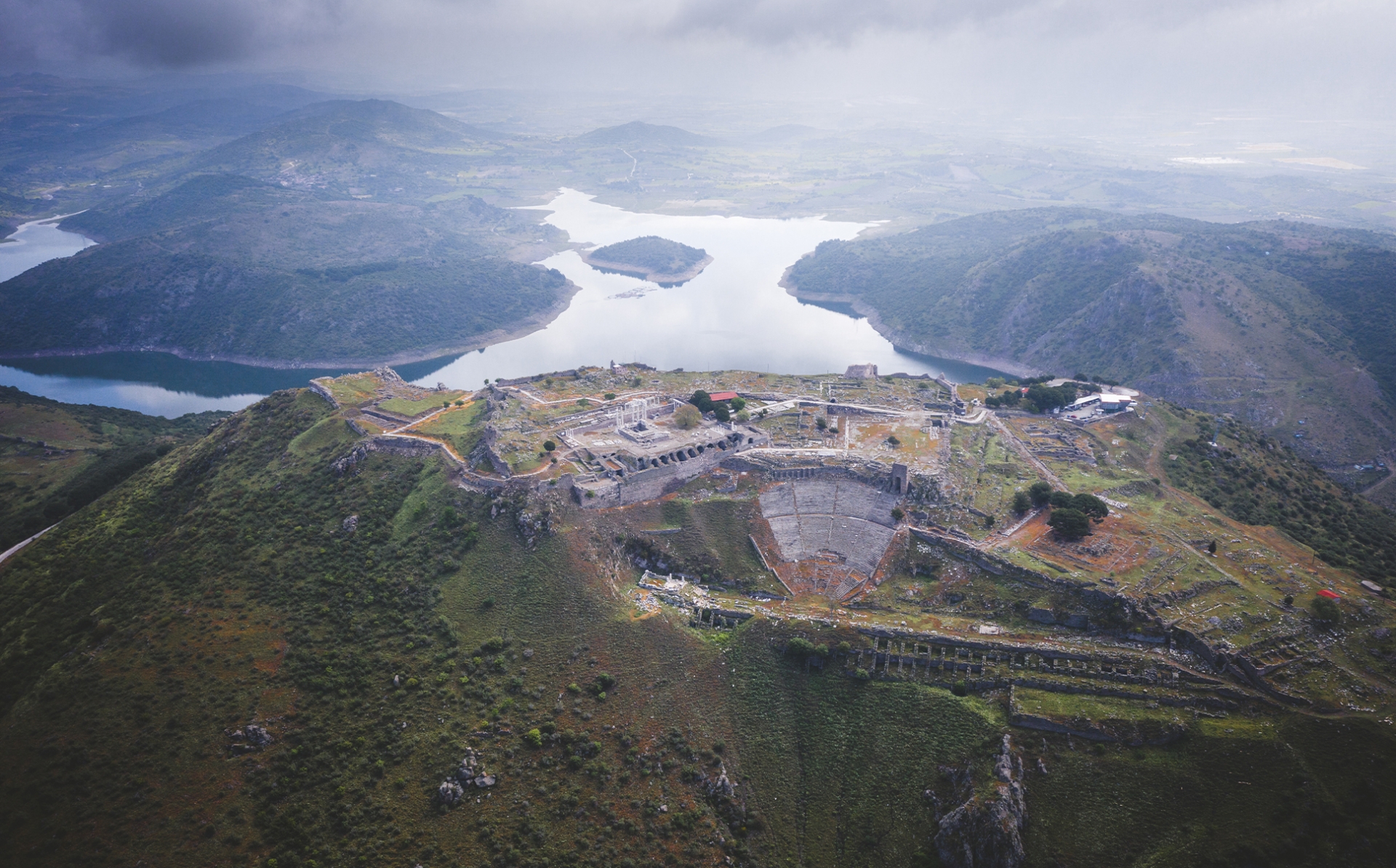
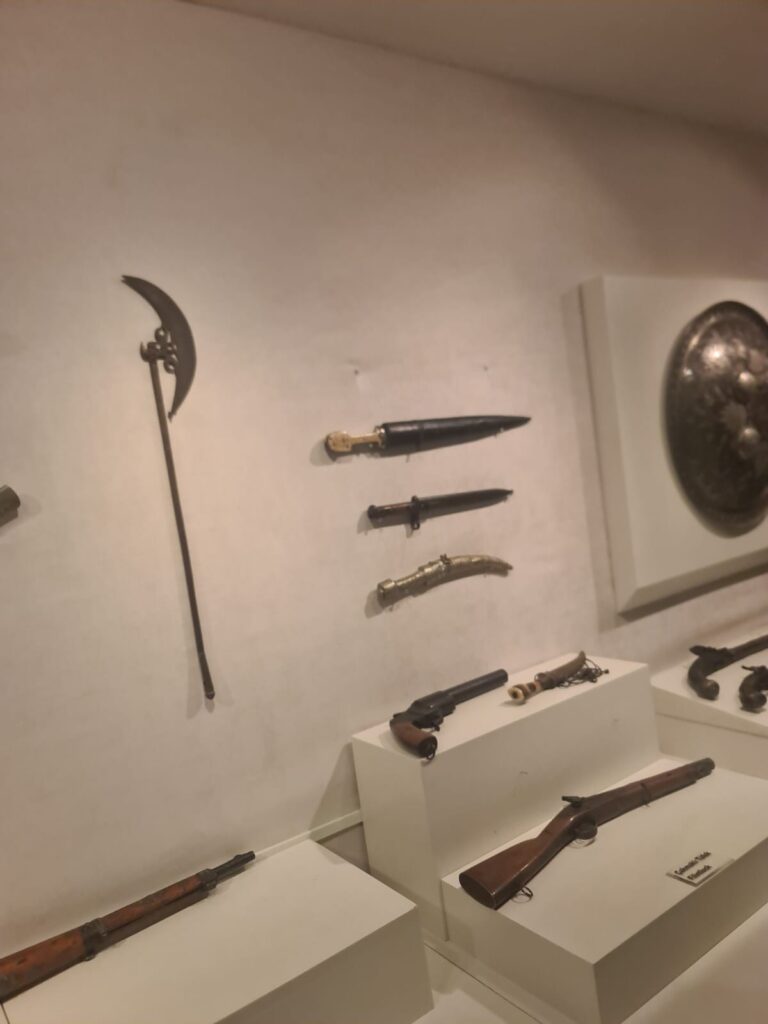
Last week, we went to Pergamon for a school trip. Pergamon is an ancient city located in İzmir. The distance from our school is nearly 90 km. We saw the ancient theatre, we learned about the Zeus Temple. We visited the museum. And we learned about the onix stone which is special to Pergamon.
WHERE DOES THE NAME BERGAMA COME FROM?
Long before the Hellenes, the Pelasgians and the Luwians lived in Western Anatolia. At that time, the name of Bergama was Parg-a-uma. Perg means “tower” or “fortress” in Arabic, while uma means “people.” The name Pergamon is a word that evolved with the beginning of Hellenization. Today, the name Bergama actually resembles its earliest form, Pargauma, more closely.
The Kingdom of Pergamon, which invented the practice of writing on leather, discovered a more practical writing material than papyrus and named it parchment, meaning “Bergama Paper.”
HISTORICAL SITES OF BERGAMA
The Acropolis:
Among the most important structures of the reign of Eumenes II are the Altar of Zeus, built in commemoration of the victory over the Galatians; the Propylon of the Temple of Athena and its surrounding stoas; the famous Library that housed 200,000 scrolls; the Great Palace; and the city walls.
During this period of growth, earlier structures such as the Temple of Athena and the steepest theater of the ancient world, with a capacity of 10,000 spectators, were preserved. The city expanded in a fan-shaped plan around this core.
The upper city served as the residence of royal families, nobles, scholars, and commanders — therefore, it had a formal and administrative character.
In the middle part of the city, from north to south, were the sacred areas of Hera and Demeter, the Temple of Asclepius, the gymnasiums, and the city fountain. This area contained public spaces not directly connected with administration — places where people could gather freely.
In the lower city, the Lower Agora was surrounded by many shops along the main road leading up to the middle and upper cities, as well as peristyle houses such as the House of Attalos. While the upper agora was situated in a higher position and served a more official function, the lower agora was the commercial center of the city.